This is not a hike that surprises you. It rewards you.
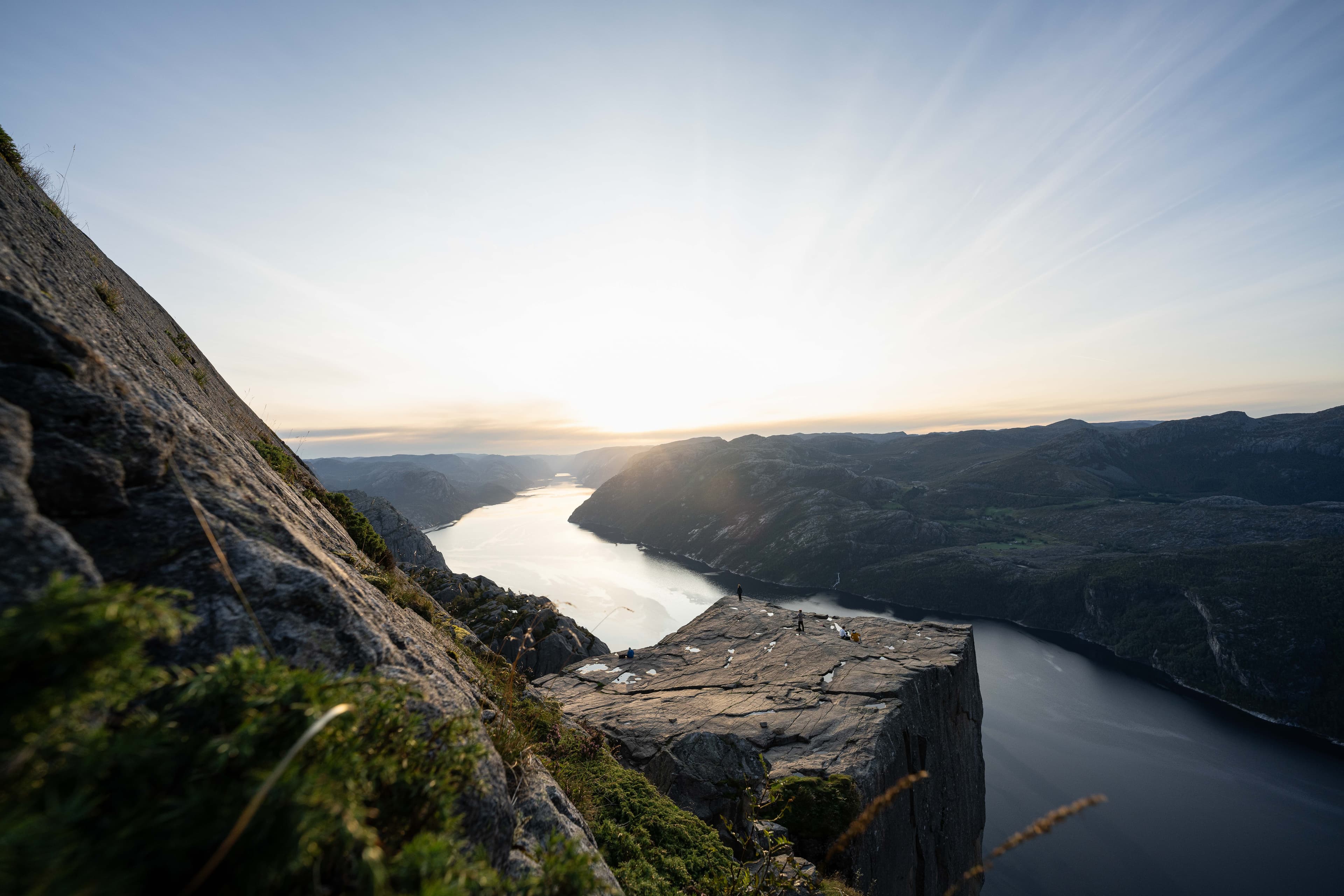
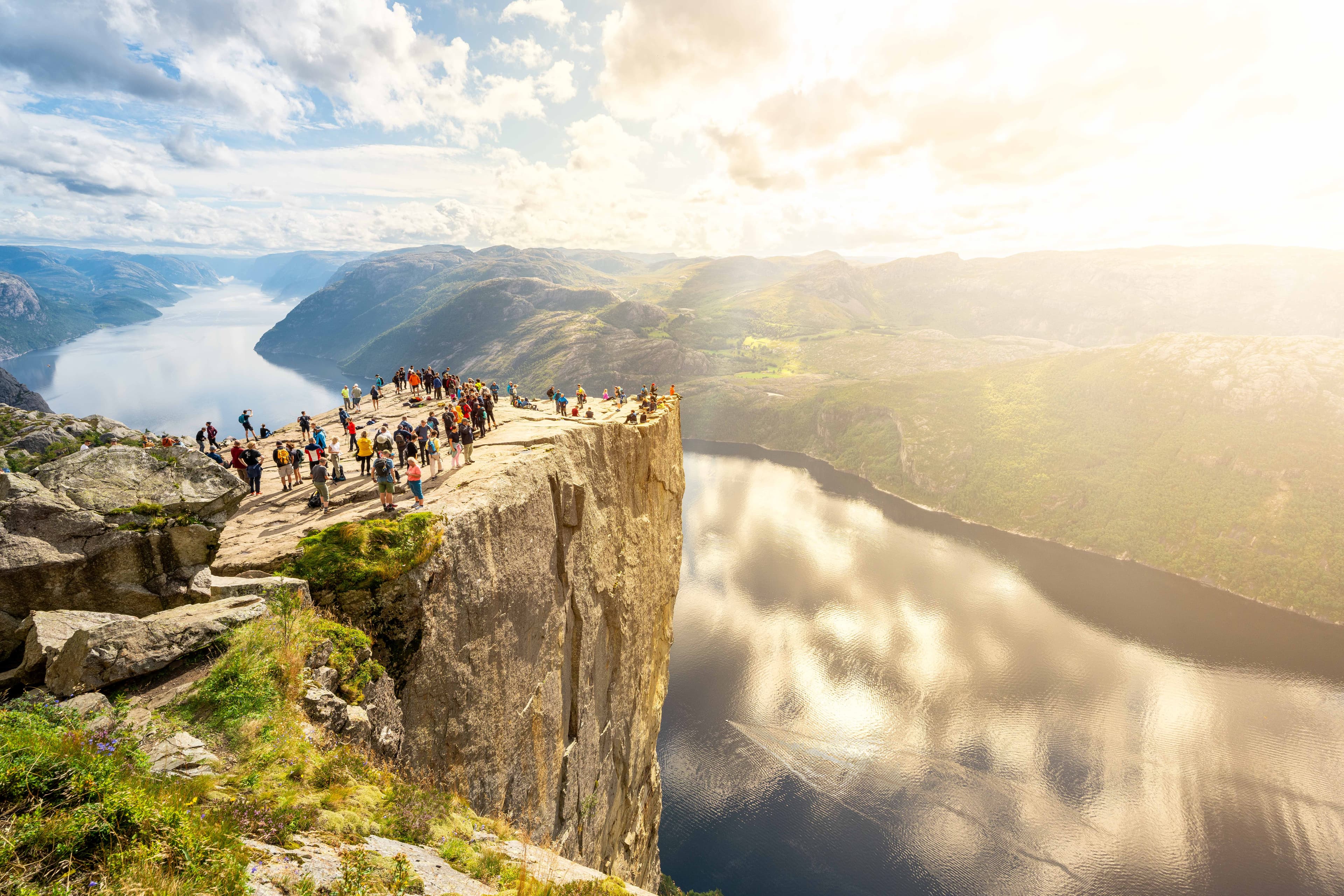
Rising 604 meters above Lysefjord, the Pulpit Rock is a plateau of glacier-carved granite roughly the size of a small village square. Some 300,000 people make the journey each year. They come for the photograph, certainly. But they remember the feeling of standing at the edge.
Preikestolen is waiting
The Trail
Eight kilometers round trip. Four hours, give or take. The elevation gain is modest—334 meters—but you feel every meter in your legs.
The path begins in forest. Old pine, mostly. Then the terrain shifts to open mountain as you climb. Stone steps, some natural, some placed by hand. The maintenance is good. The way is clear.
The difficulty is moderate, which means most people with reasonable fitness will manage fine. Children as young as six complete the hike with their families. But it is not a walk. You will want proper boots and a steady pace.
What you see along the way
The trail offers its own rewards before you reach the cliff.
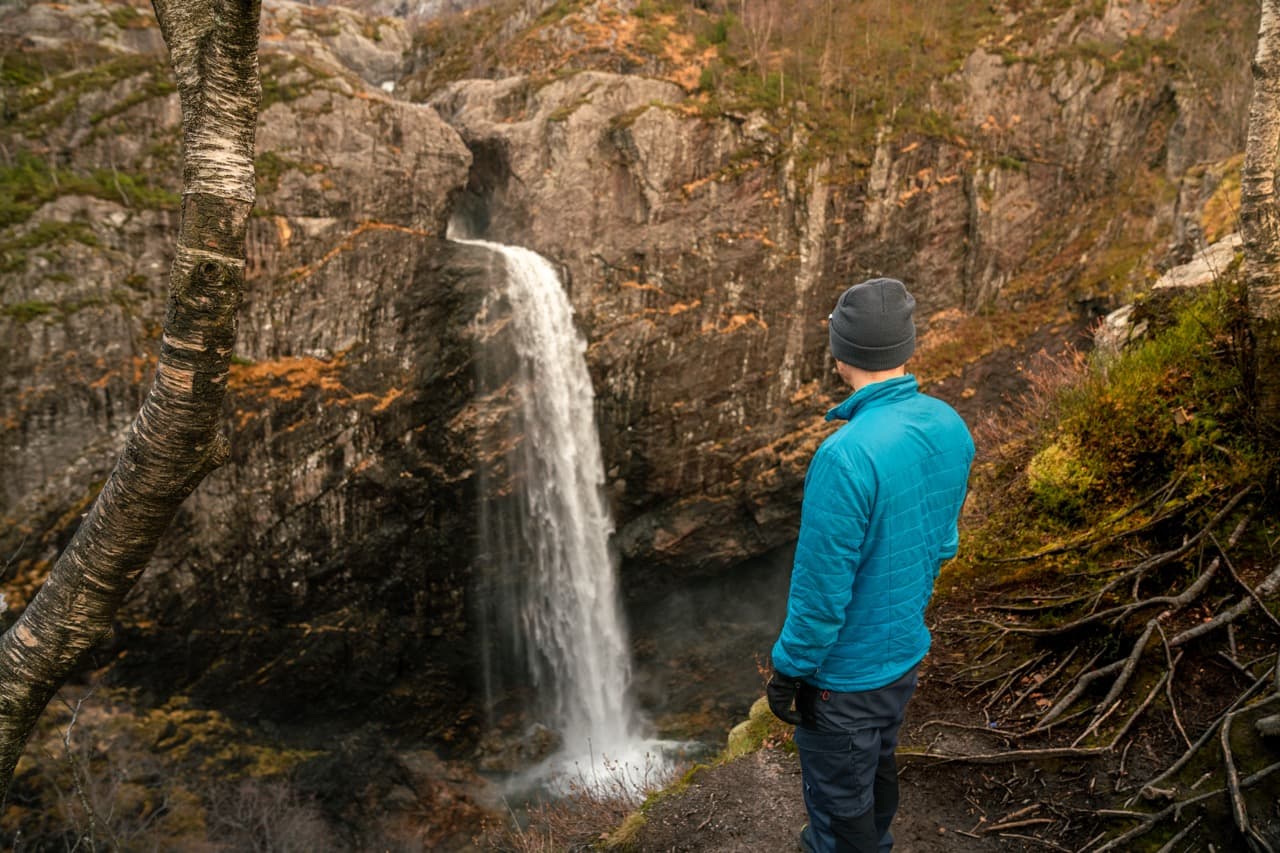
There are lakes, small and still, reflecting the sky. Streams that cut through granite. In late spring, the wildflowers—purple saxifrage, mountain avens—find footholds in cracks where soil has gathered.
Wildlife is present but not abundant. You might see reindeer on the higher slopes. Eagles sometimes circle overhead. Ptarmigan are there too, though their camouflage makes them nearly invisible until they move.
The silence is what stays with you. Wind in the trees. Water over stone. Your own breathing.
When to go
April brings the first hints of spring to the mountain. The snow begins its retreat, revealing patches of earth that have been hidden for months. Early flowers push through in sheltered spots, tentative and brave.
May and June are the awakening. Waterfalls run at their peak, fed by melting snow. The trails dry out. The days stretch long, and the light has a quality that makes everything seem possible.
July and August bring the crowds and the midnight sun. This is when the trail feels most like a pilgrimage, with hikers from every continent sharing the path. The weather is at its most stable, though rain is never far away in these mountains.
September is the secret month. The summer visitors have gone home. The birch trees turn gold, and the first frost appears on the higher ground. Those who know the mountain well often choose this time above all others.
What to bring
Footwear matters most. Ankle support is essential on uneven granite.
Dress in layers. The weather changes quickly in these mountains. A base layer that moves moisture away from skin. A mid-layer for warmth. A shell that sheds wind and rain.
Bring water—two liters is not too much. There are no reliable sources on the trail. Pack food you actually want to eat. Chocolate, nuts, a proper sandwich.
A headlamp lives in your pack, even on short days. So does a light emergency blanket. They weigh almost nothing and matter enormously if plans change.
On safety
The Norwegian mountains are not dangerous, but they are serious.
Weather deserves respect. A clear morning can turn to fog and wind by afternoon. Check the forecast. Be willing to turn back.
The cliff itself requires attention. Stay two meters from the edge. Do not climb barriers. Keep children close. Avoid the edge entirely in high wind.
Physical preparation helps. Walk some hills in the weeks before you come. Get comfortable with distance.
How it was formed
Understanding the geology deepens the experience.
During the last Ice Age, glaciers advanced and retreated across this landscape for thousands of years. The freeze-thaw cycle opened fractures in the granite. When the ice finally melted, some 10,000 years ago, it left this flat-topped outcrop hanging above the fjord.
The vertical drop was not carved by tools. It was shaped by time and ice.
Photographing the mountain
Everyone wants the photograph. A few thoughts.
The classic view requires a wide lens and careful positioning. Morning and evening light is kindest. Golden hour here is worth waiting for.
Alternative angles exist. The profile of the cliff from the left side. Lower viewpoints that emphasize the scale. Details of rock and lichen that most visitors miss.
Drones are prohibited. This is non-negotiable.
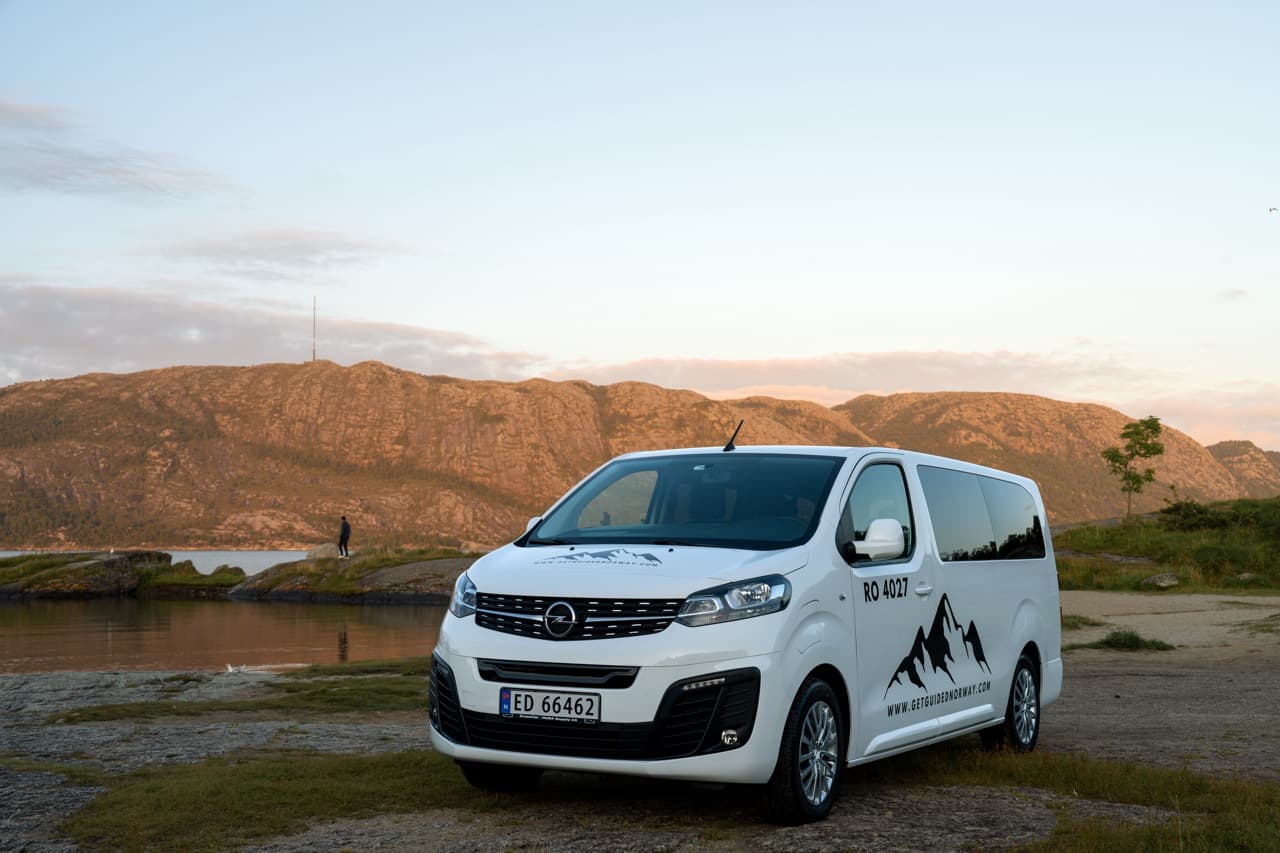
""After hundreds of trips, I have learned that the best part is not the view from the top. It is the hour of walking to get there. The smell of pine. The sound of streams. We have a word in Norwegian—friluftsliv. It means something like 'open-air living.' It is not about reaching a destination. It is about being present in the landscape while you move through it." — Teodor Sæther, Lead Guide A few practical notes The trailhead is at Preikestolen Mountain Lodge, about twenty-five minutes from Stavanger by car. Parking is available but fills early on good days. A shuttle runs seasonally from the city. Guided trips include transport, which simplifies logistics. They also provide safety briefings and local knowledge that changes how you see the terrain."
Rising 604 meters above Lysefjord, the Pulpit Rock is a plateau of glacier-carved granite roughly the size of a small village square.
The mountain does not care if you come. It was here before you arrived and will remain long after you leave. But if you do make the journey, if you walk the eight kilometers and climb the 334 meters, you will find something worth the effort.
Not just a view. A memory that stays with you.
Preikestolen is waiting. Whenever you are ready.