Long before the first tourists arrived with cameras, long before the trails were marked and mapped, these mountains and waters were home to fishermen and farmers who understood that the world contained mysteries beyond explanation. They told tales to make sense of what they saw, to pass wisdom between generations, to give shape to their fears and their wonder. Those stories remain, waiting for those who know how to listen.
The Trail
The paths through this landscape have been walked for thousands of years. Ancient routes connect fishing villages to mountain pastures, following contours that steer clear of the steepest slopes. These were not created by engineers with maps but by countless feet finding the easiest way, the safest passage, the most reliable route through terrain that could be treacherous.
Modern trails follow many of these ancient lines. You walk where Vikings walked, where medieval farmers drove their livestock, where generations of fishermen carried their catch from boat to home. The stone under your boots has been shaped by ice and weather, but also by human passage. You are adding your own small contribution to the wearing of the path, becoming part of its long history.
What you see along the way
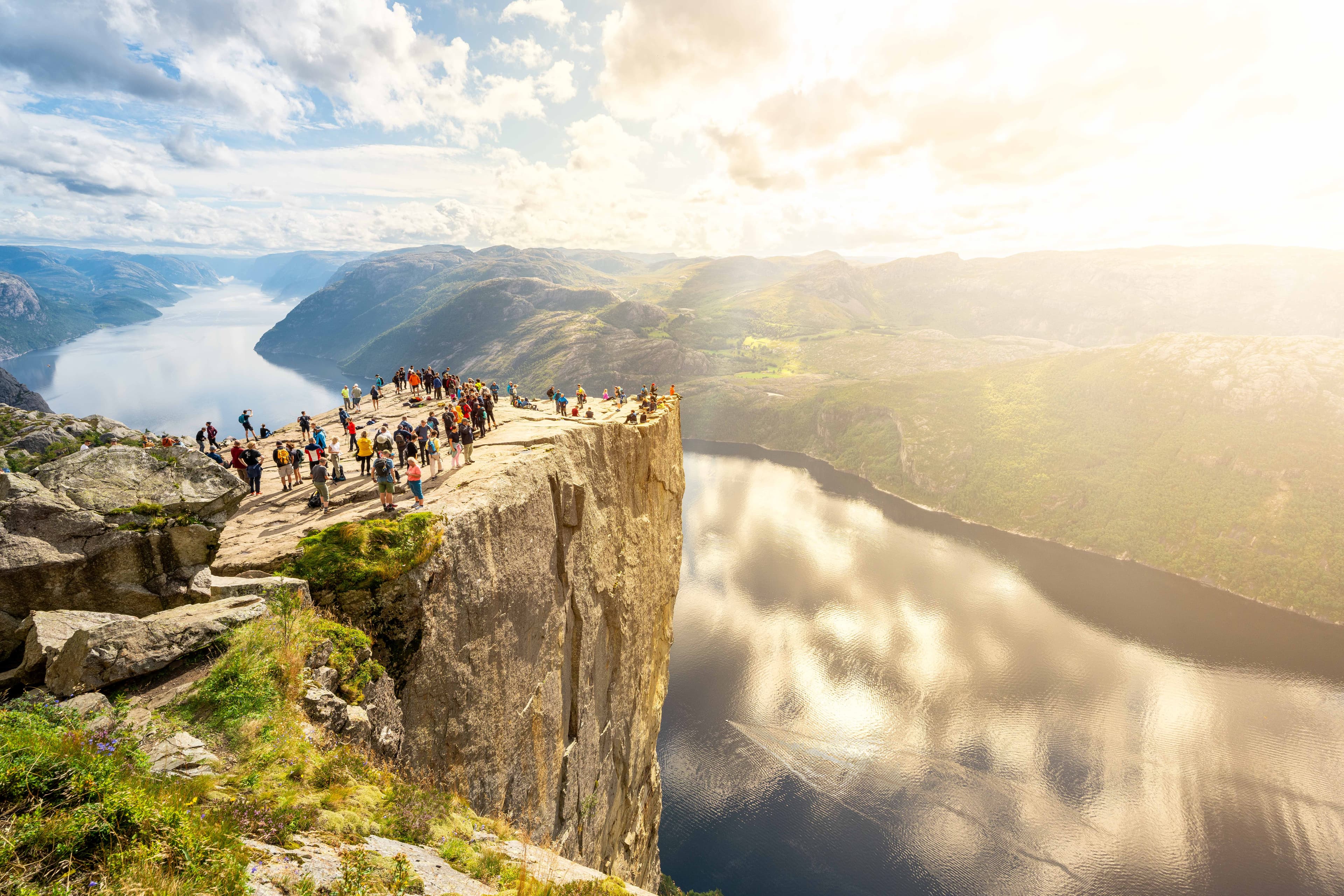
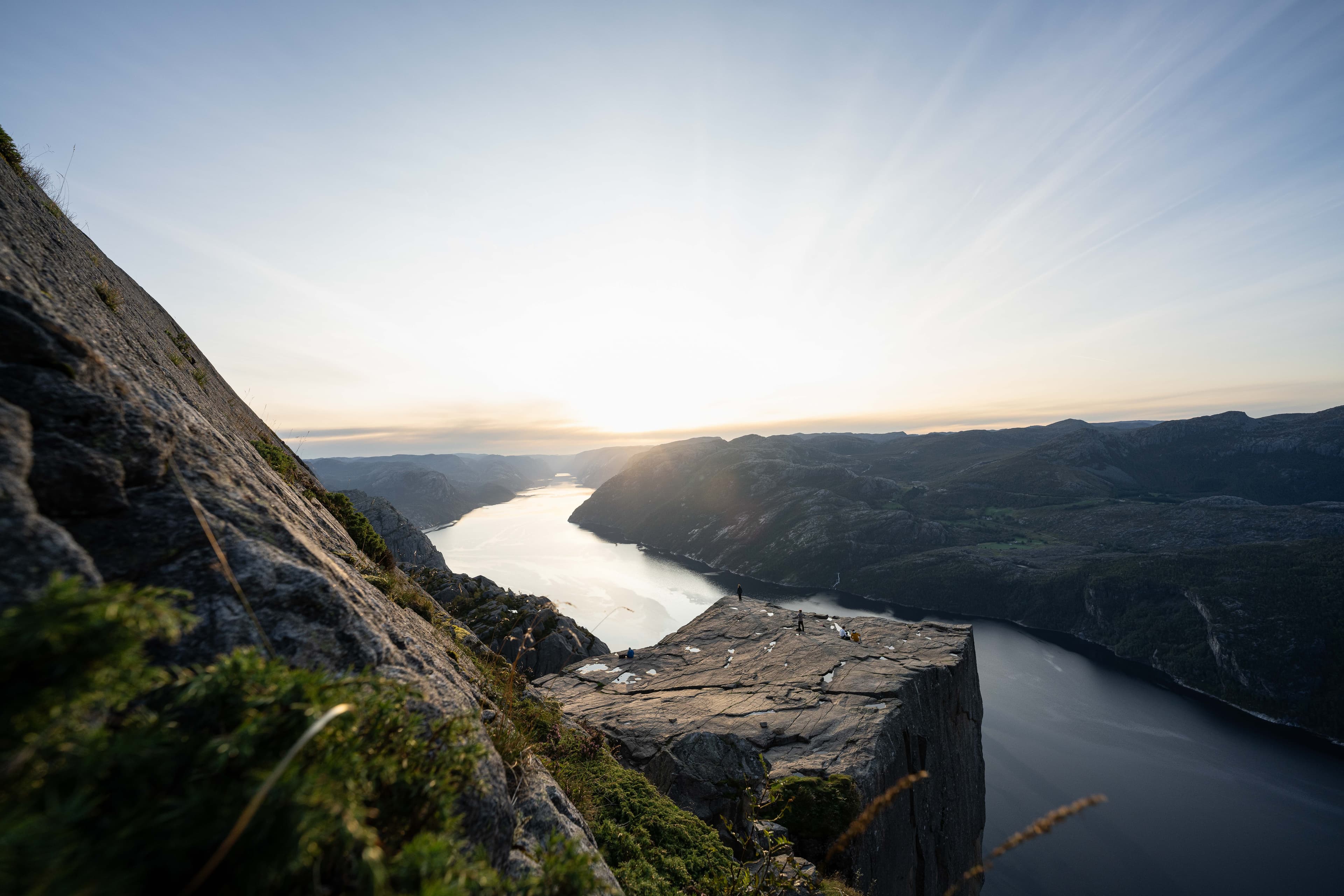
The mountains here have faces, if you look carefully. Profiles emerge from the rock, suggesting giants who once walked these lands. Local legend speaks of trolls turned to stone at sunrise, caught outside their caves when the first light touched their skin. Preikestolen itself is said to be a pulpit where ancient chieftains once addressed their people, though whether the chieftains were human or something else depends on who is telling the story.
There are tales of the Huldra, the forest spirits who appear as beautiful women from behind but reveal hollow backs when they turn. They are said to lure travelers deep into the wilderness, sometimes to harm them, sometimes to test their character. The stories serve as warnings about wandering alone, about trusting appearances, about the dangers that hide in familiar-looking places. Old farm ruins appear in clearings, their stone walls slowly returning to the earth, their stories nearly forgotten except in local memory.
When to go
Different seasons bring different tales to life. Winter, with its long nights and deep snows, was the traditional time for storytelling, for gathering around fires while storms raged outside. The darkness made the stories feel more real, more immediate, as if the creatures they described might be listening just beyond the circle of light.
Summer brings the midnight sun, and with it folklore about the strange things that happen when day refuses to end. Sleep becomes difficult, boundaries blur, and the veil between the ordinary and the extraordinary grows thin. Autumn stories speak of the dead walking closer to the living, of ancestors returning to check on their descendants, of offerings left at certain stones to ensure good fortune through the coming winter.
What to bring
Stories do not demand equipment in the usual sense. They ask only that you pay attention, that you move slowly enough to notice what the land is trying to tell you. Bring your curiosity. Bring your willingness to wonder. The stories respond to those who approach with respect, who understand that not everything needs to be explained or photographed or conquered.
A notebook can be useful, not for capturing the stories so much as capturing your own responses to them. Some people bring small offerings to leave at certain sites, a tradition that continues from ancient practice. Others bring simply an open heart, ready to receive whatever the landscape chooses to share.
On safety
The folklore of this region was not created for entertainment. It was survival knowledge dressed in narrative, warnings and instructions passed down in forms that would be remembered. The tales of trolls turned to stone teach respect for the danger of being caught out after dark. The stories of the Huldra warn against following strangers into unknown territory.
There is a form of safety in this respect. Not the safety of guardrails and warning signs, but the safety that comes from understanding that you are walking through a landscape that holds meaning beyond what you can see. The stories teach humility. They remind us that we are temporary visitors in a place that has been shaped by forces and timescales beyond our comprehension.
How it was formed
The geological story of Lysefjorden is dramatic enough to seem like legend. During the last Ice Age, massive glaciers carved this trench through the bedrock, scouring away thousands of meters of material, creating walls that rise vertically from the water. When the ice retreated some ten thousand years ago, it left a landscape that seemed designed to inspire awe and fear.
But the human stories are equally layered. Viking settlers found this fjord and recognized its shelter and its resources. Medieval farmers built their homes on the few patches of flat ground, scratching a living from thin soil and abundant fish. Their descendants stayed for generations, developing a culture adapted to the demands of the place, creating stories that helped them understand their world and their place within it.
Photographing the landscape
Photography here is different when you know the stories. The same cliff that makes a dramatic backdrop becomes a character in an ancient drama. The same mist suggests presences rather than absences. The challenge is to capture not just what you see but what you feel, the sense of depth and history that permeates the place.
The best images often come when you stop trying to capture the obvious and start noticing the subtle. Light falling a certain way on a rock face. Water creating patterns that suggest deliberate design. Moments of weather that transform the familiar into the strange. These photographs honor the stories by acknowledging that the landscape contains depths beyond what can be seen.
""I have been guiding here for many years, and I am still learning the stories. Some I heard from my grandfather. Others I have collected from people I meet along the way, old fishermen and farmers who remember things their grandparents told them. The stories are not static. They grow and change. But the core remains true, that this is a place of power and mystery, that it demands respect, that it rewards those who approach with humility and an open heart." — Aleksander Omtvedt, Lead Guide A few practical notes Certain places along the fjord carry more stories than others. Old settlements, abandoned farms, particular rock formations that feature in multiple tales. These are not marked on tourist maps. They are found through conversation, through relationship, through the slow building of trust that allows local knowledge to be shared."
The stories will outlast us. They have outlasted countless generations already, shifting and adapting but never quite disappearing. Lysefjorden does not need our belief to maintain its mysteries. It simply is, as it has been for thousands of years, a landscape that inspires wonder and fear and reverence.
If you come here, walk slowly. Listen more than you speak. Notice how the light changes, how the water sounds, how the mountains seem to watch. The stories are still being told, not in words necessarily, but in the way the world presents itself to those who pay attention.
Lysefjorden is waiting. And it has stories to share, if you are ready to hear them.